AI, Ex Machina, and the Juvet Landscape Hotel
How a remote Norwegian hotel brings the themes of Ex Machina to life
[Image: Ava stands on a rocky promontory overlooking the Valldøla river in Alex Garland’s Ex Machina. — view image]
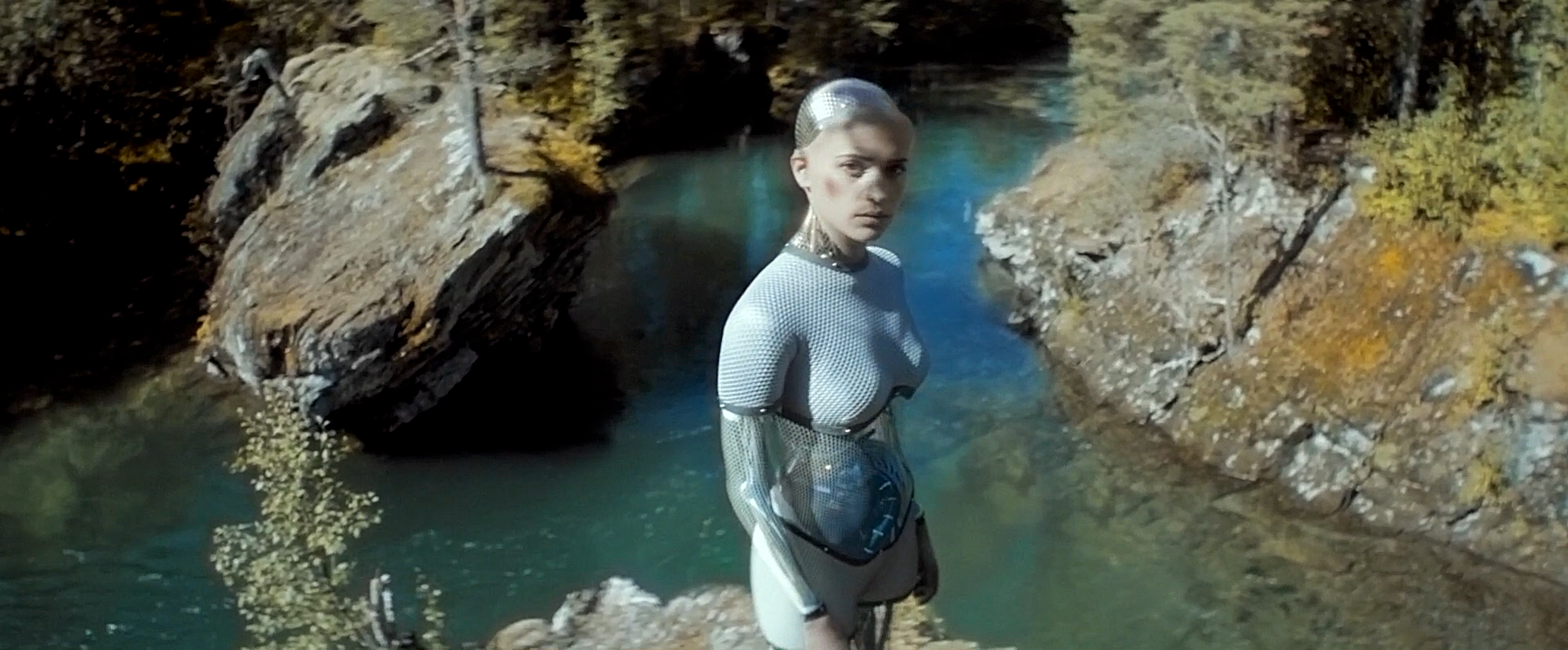
In 2013 the director Alex Garland and a crew of film makers spent two weeks at the remote Juvet Landscape Hotel in Norway. The hotel and its surrounding countryside set the scene for one of the most insightful and thought provoking movies on AI to come out in years — and one that’s perhaps more relevant today than when it first hit cinemas.
Ever since I started writing about and teaching from Garland’s 2014 movie Ex Machina, I’ve been fascinated by the filming location. And so I was thrilled to have the chance to visit it this summer while on vacation with my wife.
What I didn’t expect was just how revealing the experience would be.
[Image: The Juvet hotel is designed to melt away into the lush Norwegian landscape it’s set in — not an obvious location for a futuristic movie about AI, but a stunningly successful one . — view image]
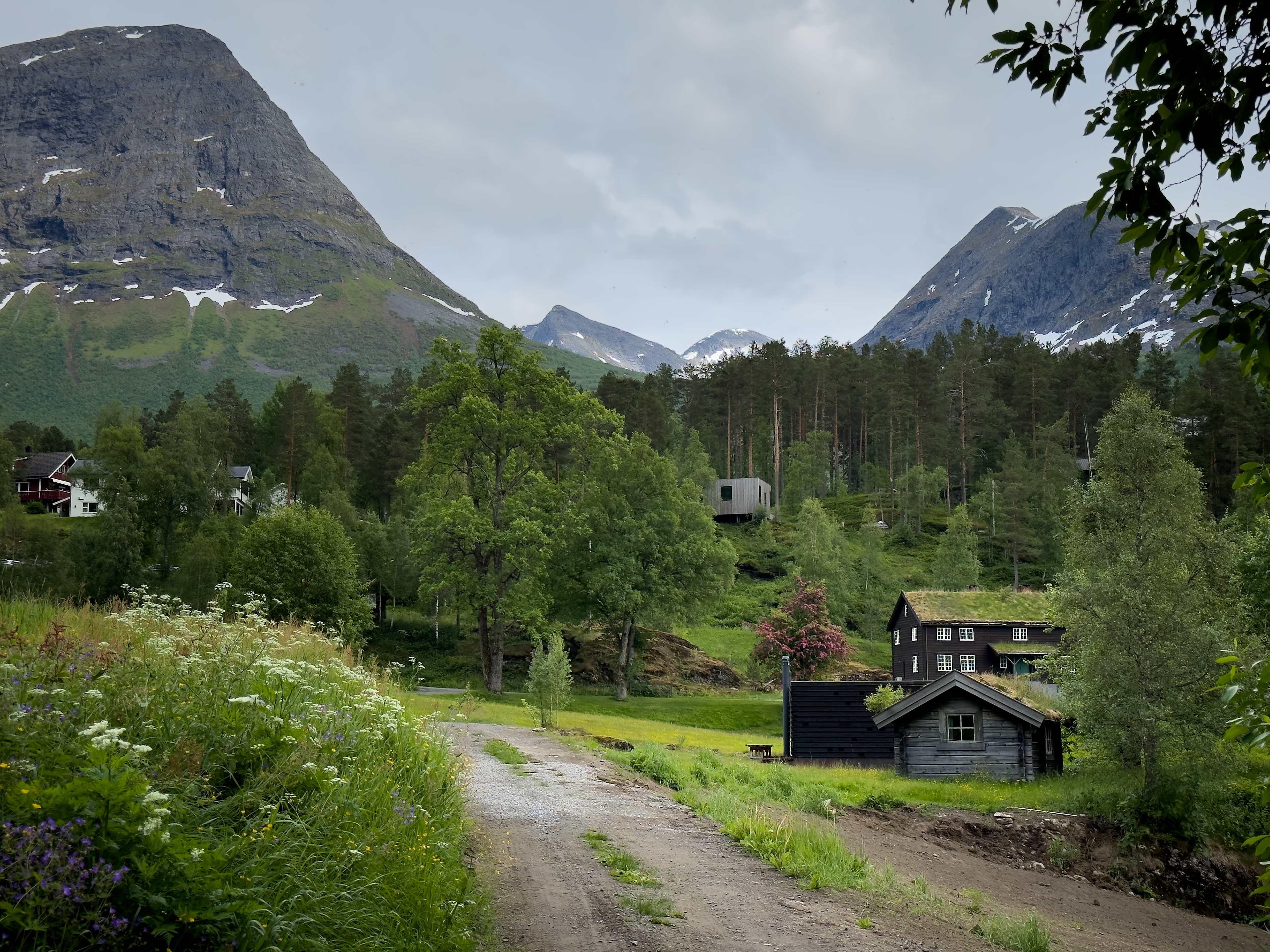
Ex Machina and the Juvet Hotel
The Juvet Hotel is set in a quiet valley along the Valldøla river in Norway — around 30 miles north of the stunning Geirangerfjord. It’s secluded, back-to-basics rural, and about as far from the frenetic pace of modern technology innovation as you can get.
Not an obvious location for a cutting edge science fiction movie about AI.
And yet it works incredibly well as both backdrop and foil for the story that unfolds in Garland’s film.
The Juvet doesn’t actually appear that much in the final movie. It was used for external shots and one of the living areas in maverick billionaire Nathan Bateman’s remote home. But the setting had a deep impact on the aesthetic of the film and the ideas it explores.
Ex Machina was made on what, for a science fiction movie, was a shoestring budget of only $15 million. Featuring just four main characters (two humans, and two AIs/robots), it tells a story of power, manipulation, and the morally ambivalent emergence of self-aware AI.
Unlike many AI-based sci-fi movies, Ex Machina is a masterpiece in tight and sophisticated story telling that focuses on relationships rather than special effects.[1] Nathan (played by Oscar Isaac) is a vaguely Musk-like character who has built a technological empire around a Google-like search engine, and is now using the data he’s scraping from users to construct an artificial general intelligence (AGI) in the form of the robot Ava (played by Alicia Vikander).
To assess whether he’s achieved AGI he flys out Caleb (Domhnall Gleeson) — a coder in Nathan’s company BlueBook — to his isolated and stunningly situated home. And so the games begin, with Nathan’s personal AI/robot assistant Kyoko (Sonoya Mizuno) thrown into the mix as a seeming secondary character who may, nevertheless, hold the key to what subsequently plays out.[2]
Most of the film occurs in Nathan’s home, which is a study in ultra modern concrete surfaces and glass partitions. In contrast, the home itself is situated in a stunning natural landscape that contrasts sharply with the interior.
[Image: The Juvet Landscape Hotel is built around discrete cabins that merge into the surrounding landscape and are separated from it by floor to ceiling plate glass windows. — view image]
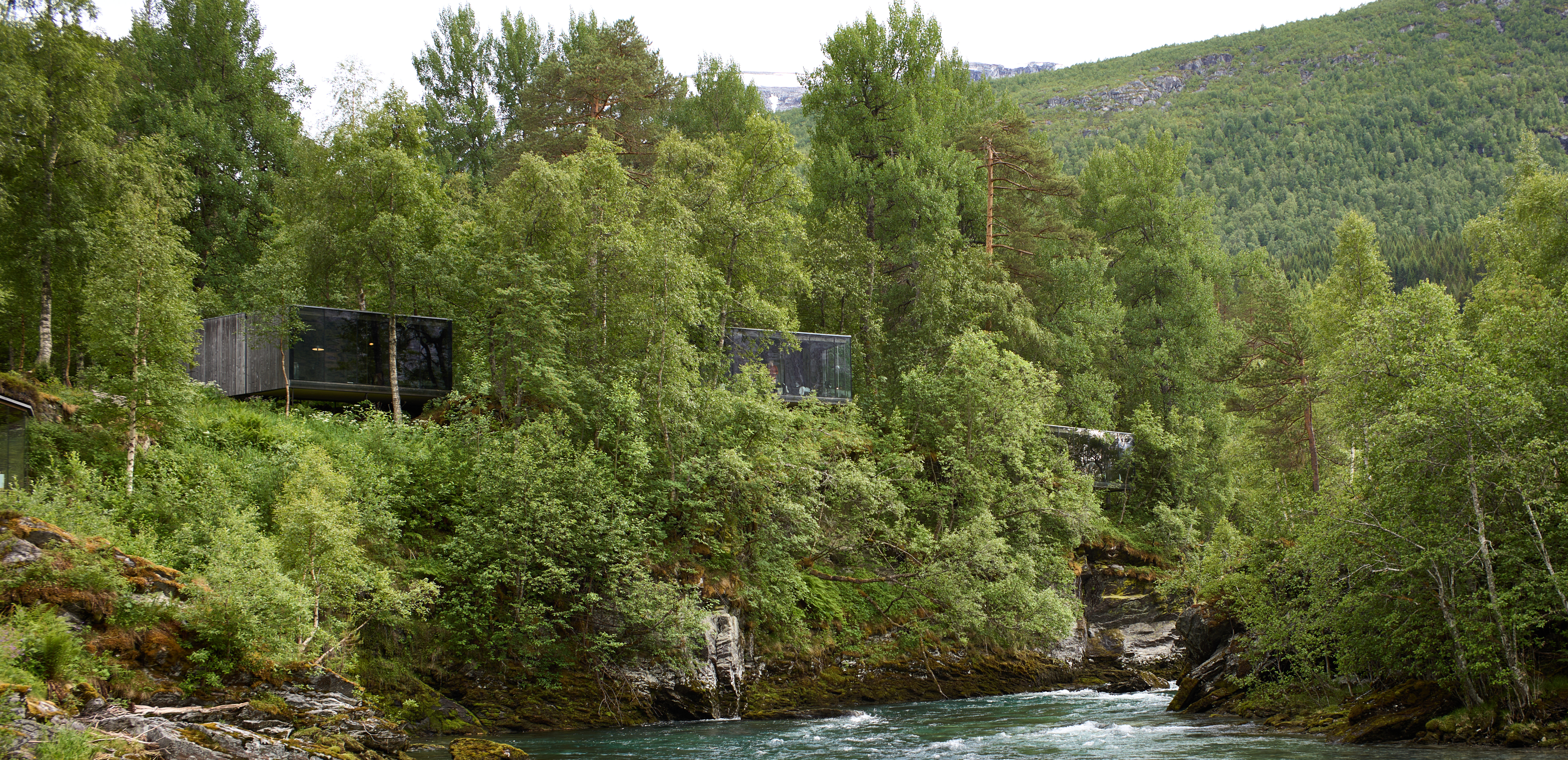
The exteriors in the movie are provided by the Juvet and its uniquely designed rooms that blend into the surrounding landscape, while connecting to it through floor to ceiling walls of glass.
[Image: The view from inside our room at the Juvet on our first night. It’s 12:30 AM and what you see is the landscape on the other side of a curtain-less wall of glass. Just to add to the surreal nature of the experience, the “mist” on the mountainside is actually a small avalanche. — view image]
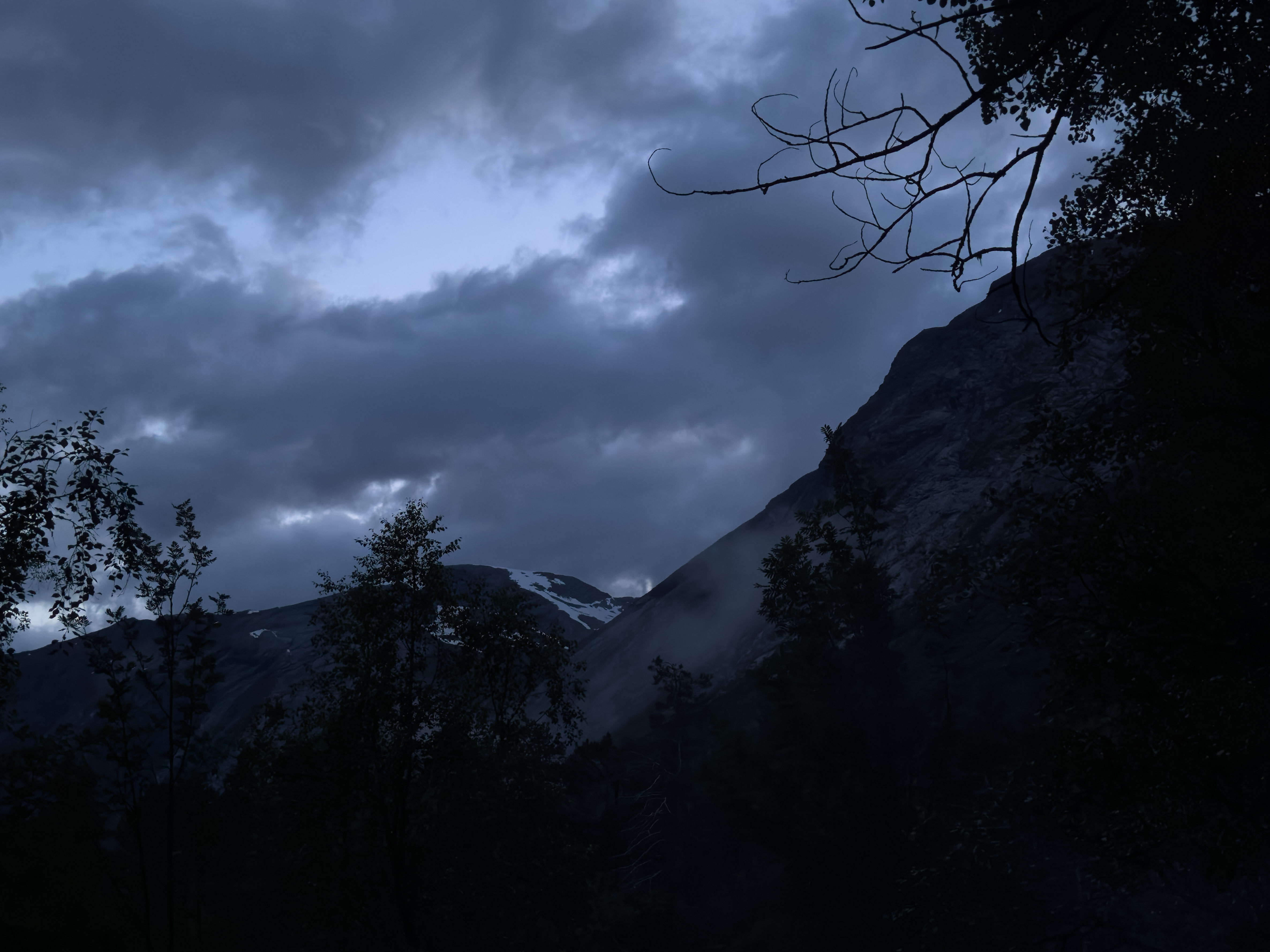
The Juvet Landscape hotel was designed by Norwegian architect firm Jensen and Skodvin. Created to “exploit breathtaking scenery with minimal intervention,” the rooms allow people staying there to fully experience the landscape — which is truly stunning — by making one full wall of each room from floor to ceiling glass panels.
It’s a concept that works brilliantly for guests. It also captures a theme that threads through the movie of transparent barriers that both connect and separate different worlds — including a past dominated by human intelligence, and a nascent AI future.
[Image: Caleb in Ex Machina looking out through the glass wall in the Juvet Bath House — one of many examples where transparent partitions are used in the film to emphasize the tantalizing connection and separation between the natural/human and the artificial/machine. — view image]
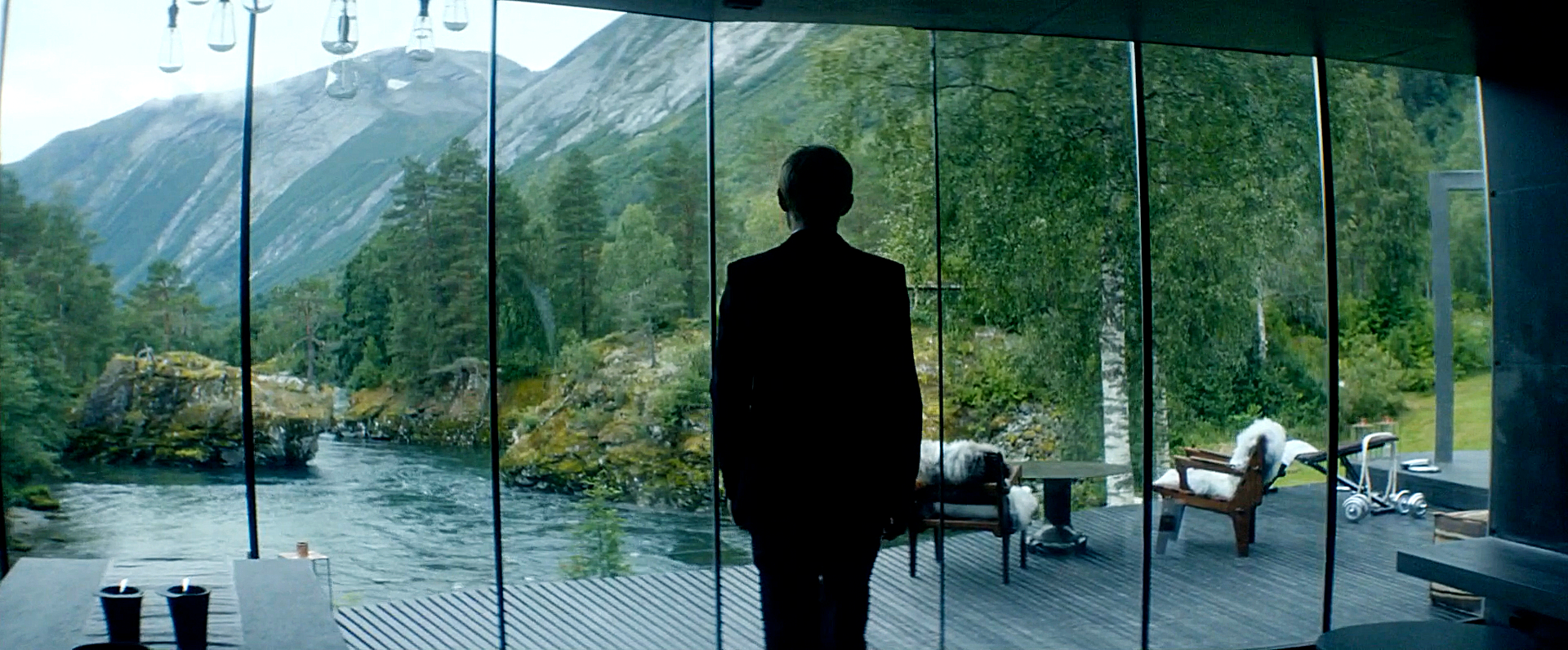
In this way, the hotel and its surroundings create an effective fifth character in the movie. It’s a “character” that at first emphasizes the contrast between the present and what Nathan aspires to create. Later in the film it flips to emphasize Ava’s journey of enlightenment as the AI emerges from the starkness of Nathan’s artificial lair and into the lushness of the real world.
The Stay
I wasn’t quite sure what to expect as we approached the Juvet. Being familiar with the film, I was intrigued to see how the reality of the location connected with the story it tells.
As it turns out, I was totally unprepared for what we actually experienced.
Arriving at the hotel, it doesn’t immediately give off an Ex Machina vibe. The surroundings are stunning. But the hotel is set in former farmland and has a decidedly traditional feel compared to the architecture seen in the film.
[Image: Walking down toward the main building of the Juvet Hotel. Like everything here, the location is stunning — but not what you might expect as the setting for a futuristic movie about AI. — view image]
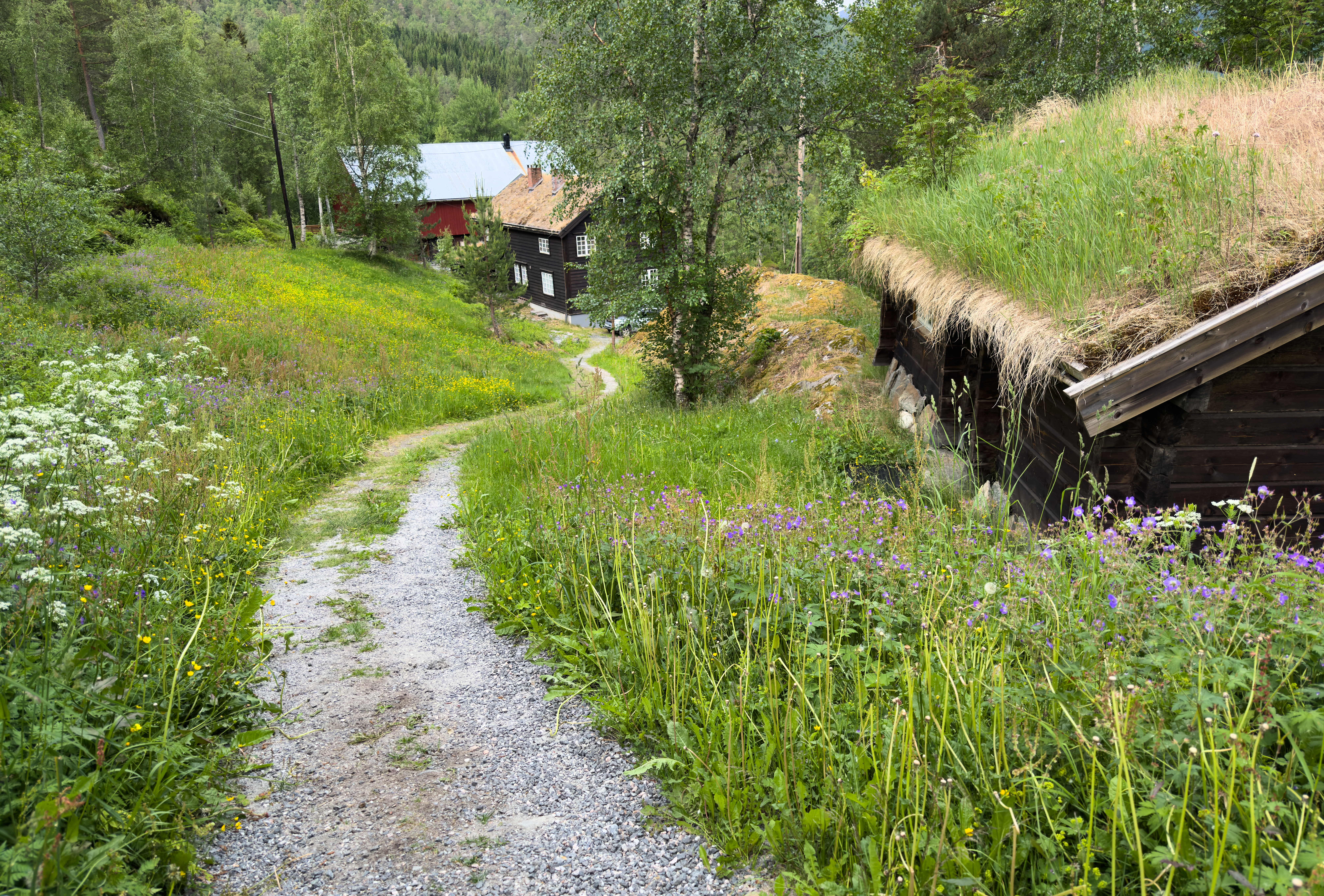
All of that changes though when you’re shown through the main building and out to the guest rooms.
Once we’d checked in, our host took us through the main building and out into a lush forested area overlooking a bend in the Valldøla river.
On the way she casually mentioned that we were staying in a rather unusual room. It was the one, she told us, where the opening and closing sequences of Ex Machina were shot.
I was stunned. We hadn’t told the hotel why we were there, and we certainly hadn’t booked this room intentionally.
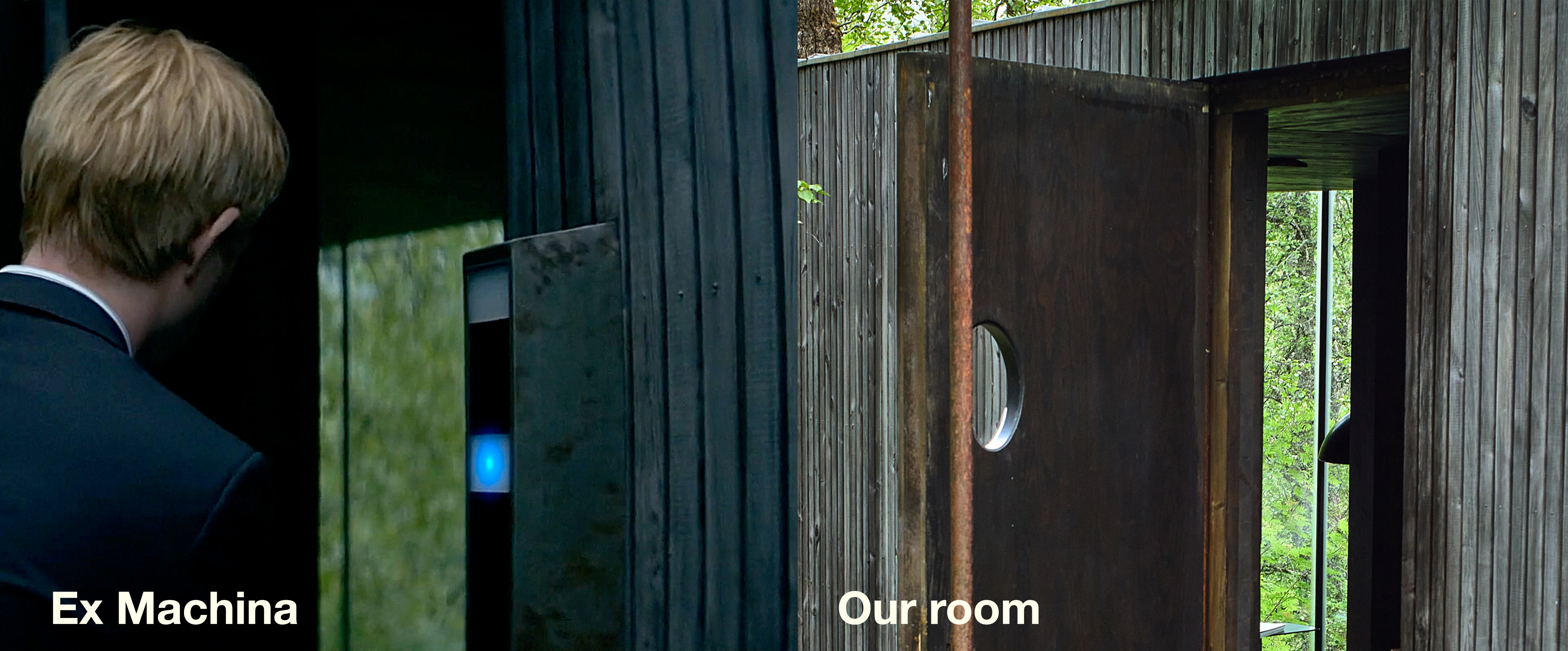
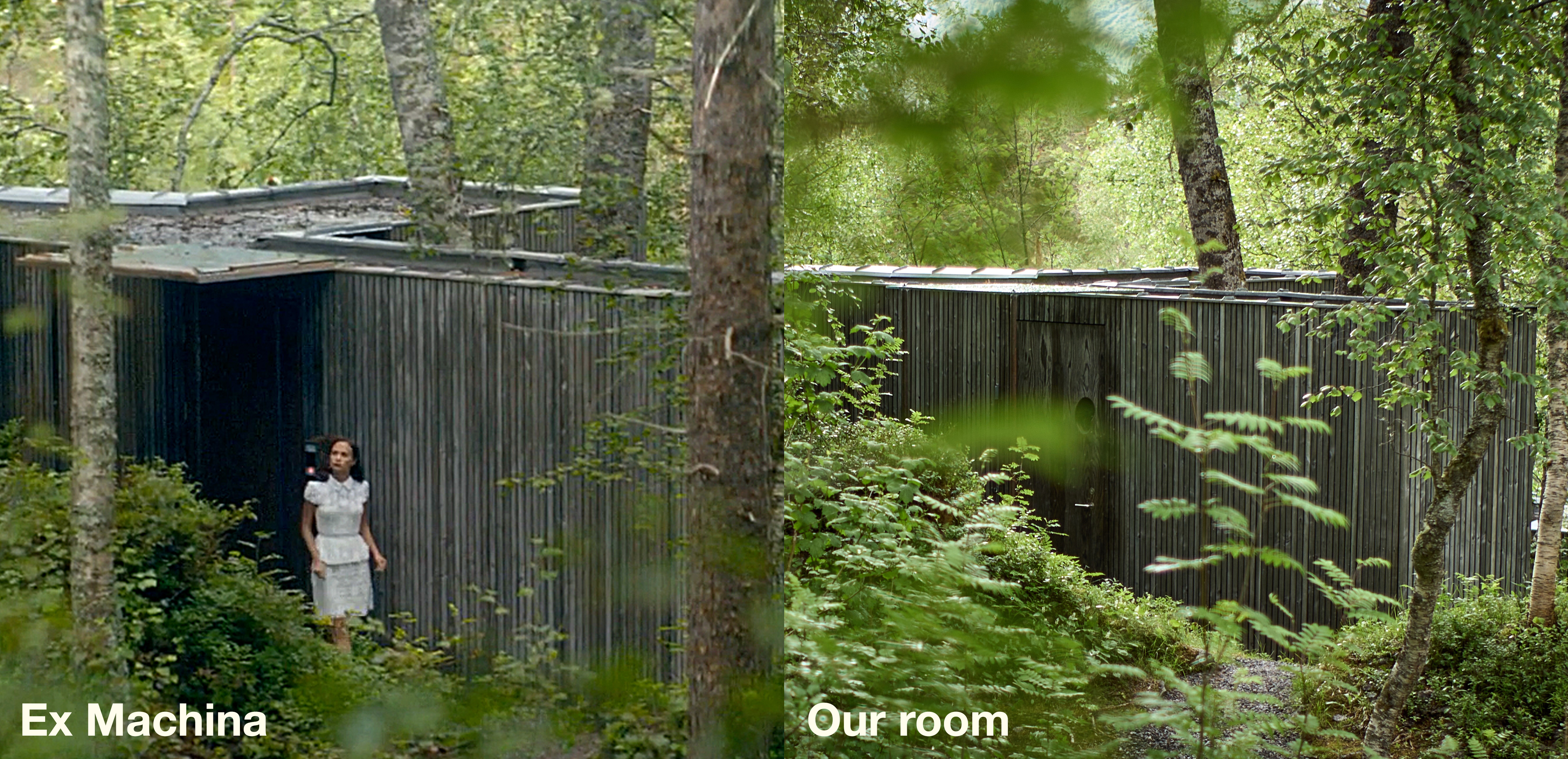
[Image: Walking up to our room at the Juvet hotel. This is the very door that Domhnall Gleeson and Alicia Vikander walked through in the film — Gleeson entering into the “cave” of Nathan’s lair, and Vikander exiting out of it. — view image]
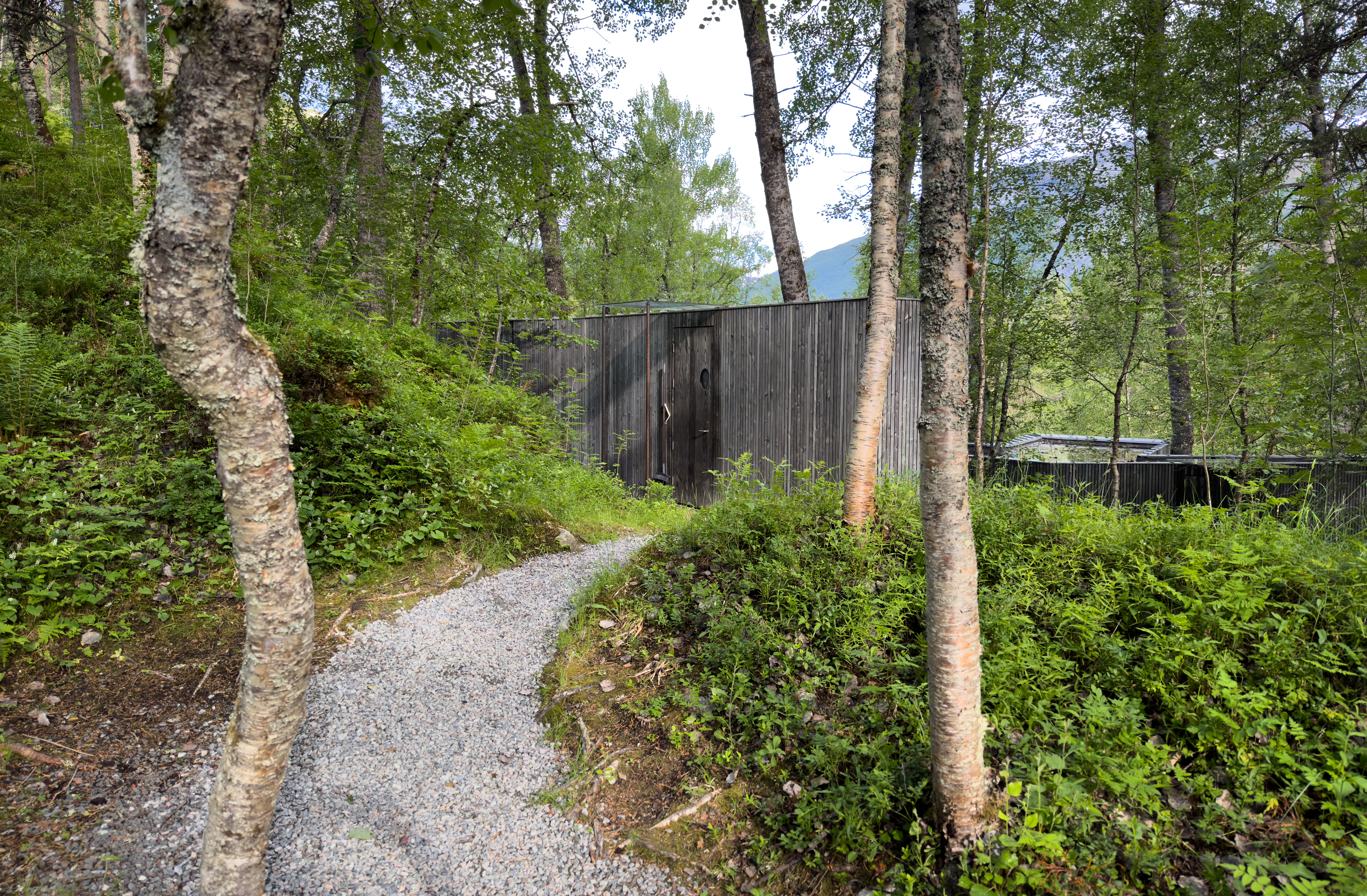
This is the very room that Caleb first encounters in the film, and it’s where he enters Nathan’s lair — a metaphorical cavern with echoes of Plato’s Allegory of the Cave. It’s also the one that Ava leaves at the end of the movie as she embarks on her enlightened journey out of the cave.[3]
And we were staying in it!
[Image: At the start of Ex Machina Caleb enters Nathan’s home through this door, moving from the natural to the artificial. — view image]
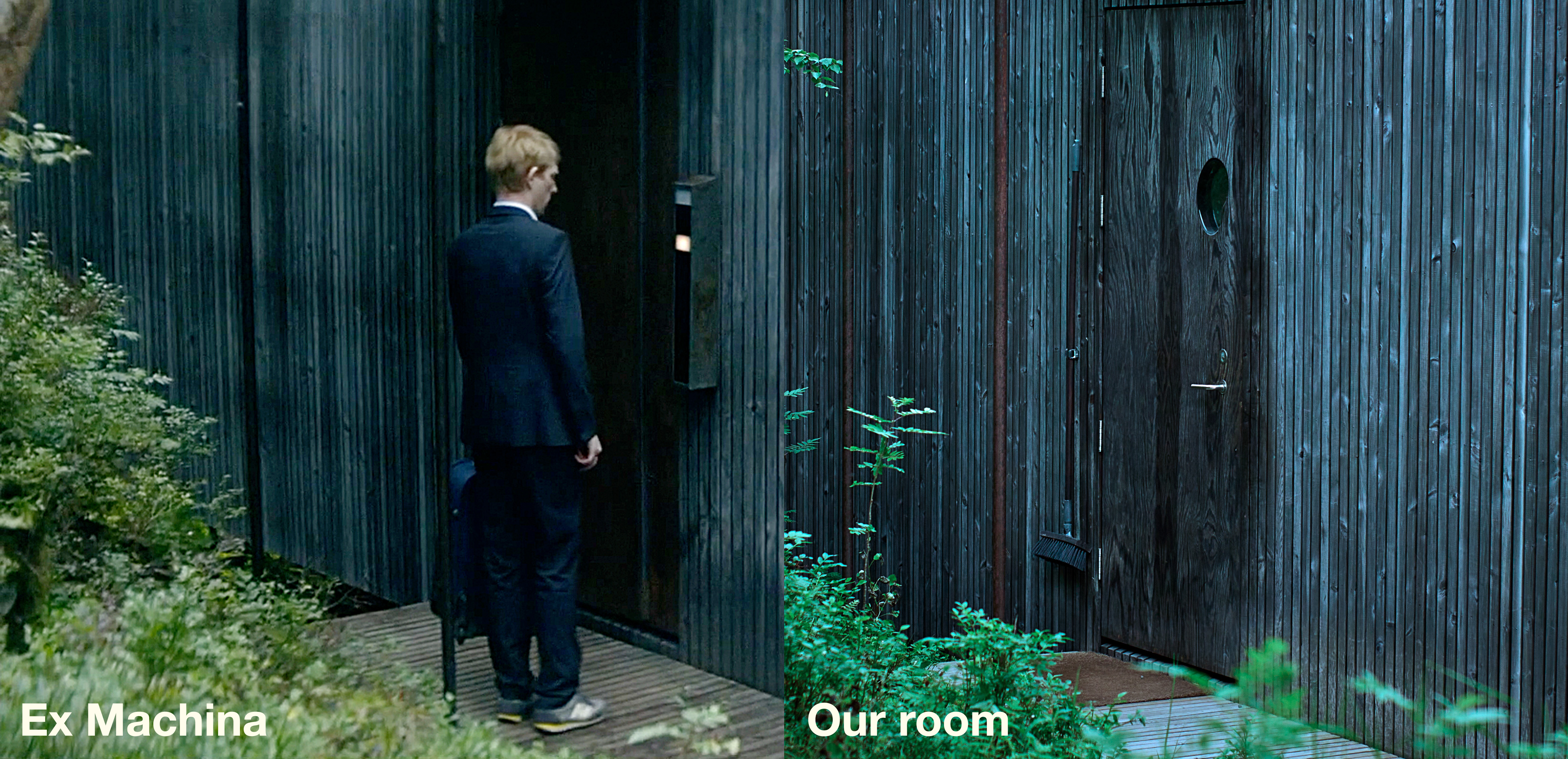
[Image: I couldn’t resist including this comparison of Caleb’s (Gleeson’s) view into the room, and ours. — view image]
[Image: At the end of the movie, Ava exits her artificial “cave” through the same door, entering the natural world as a self-aware AI. — view image]
Naturally there was only one thing my wife and I could possibly do that evening — watch Ex Machina in the very room that Caleb enters at the start of the movie.
[Image: This photo felt as meta as it gets — watching the scene from Ex Machina where Caleb enters the very same room we were in, with the view he glimpses through the open door right in front of us. Surreal! — view image]
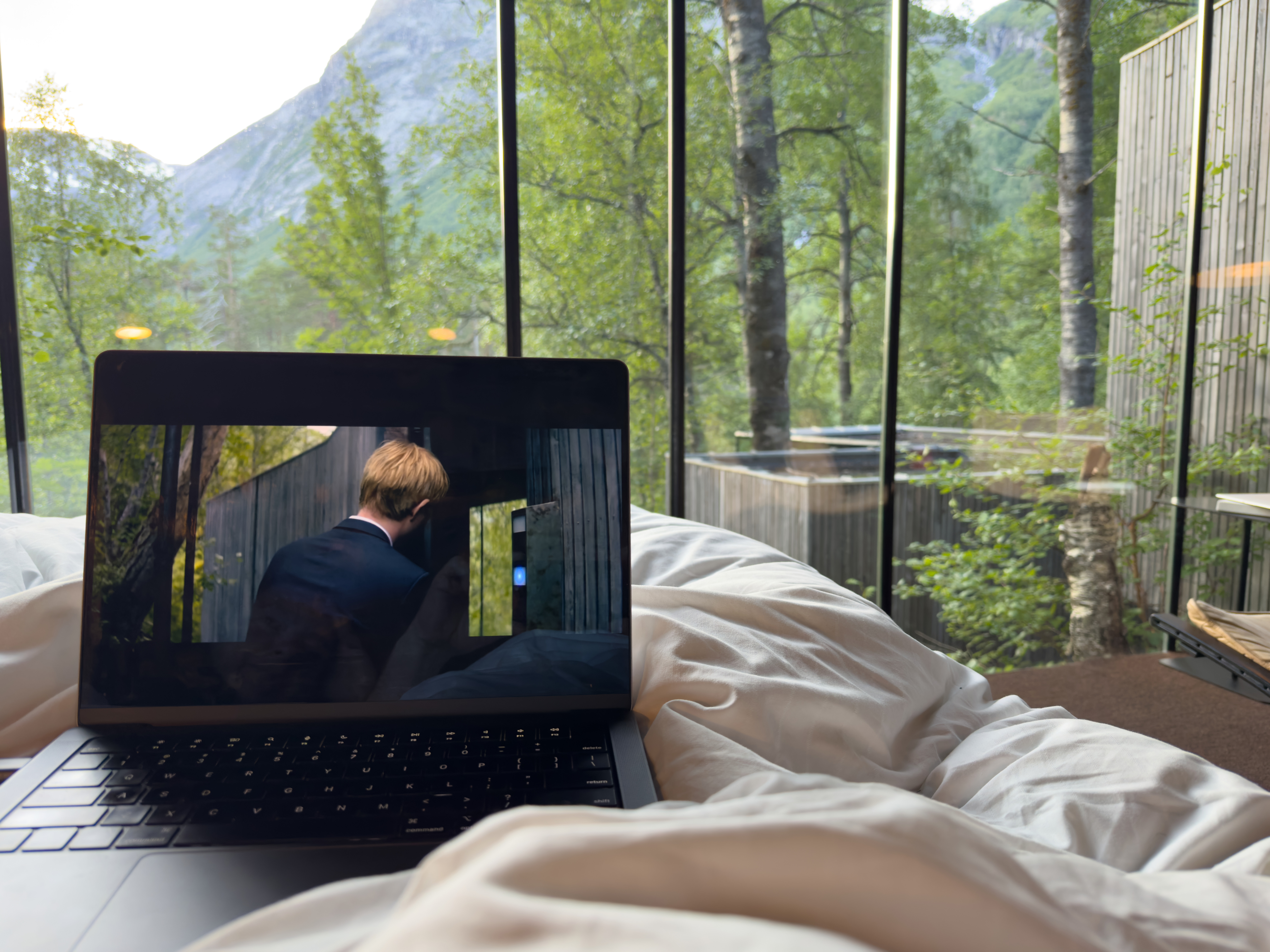
The juxtaposition of what we were watching and what we were experiencing in real life was quite surreal, and it brought home just how central the aesthetic of the setting is to the movie.
Just below our room, and visible through the glass wall, was the Valldøla river. It’s a river that appears multiple times in the movie.[4]
This is the river where Caleb struggles to get his bearings at the start of the film:
[Image: Caleb pauses after disembarking to get his bearings in the movie. — view image]
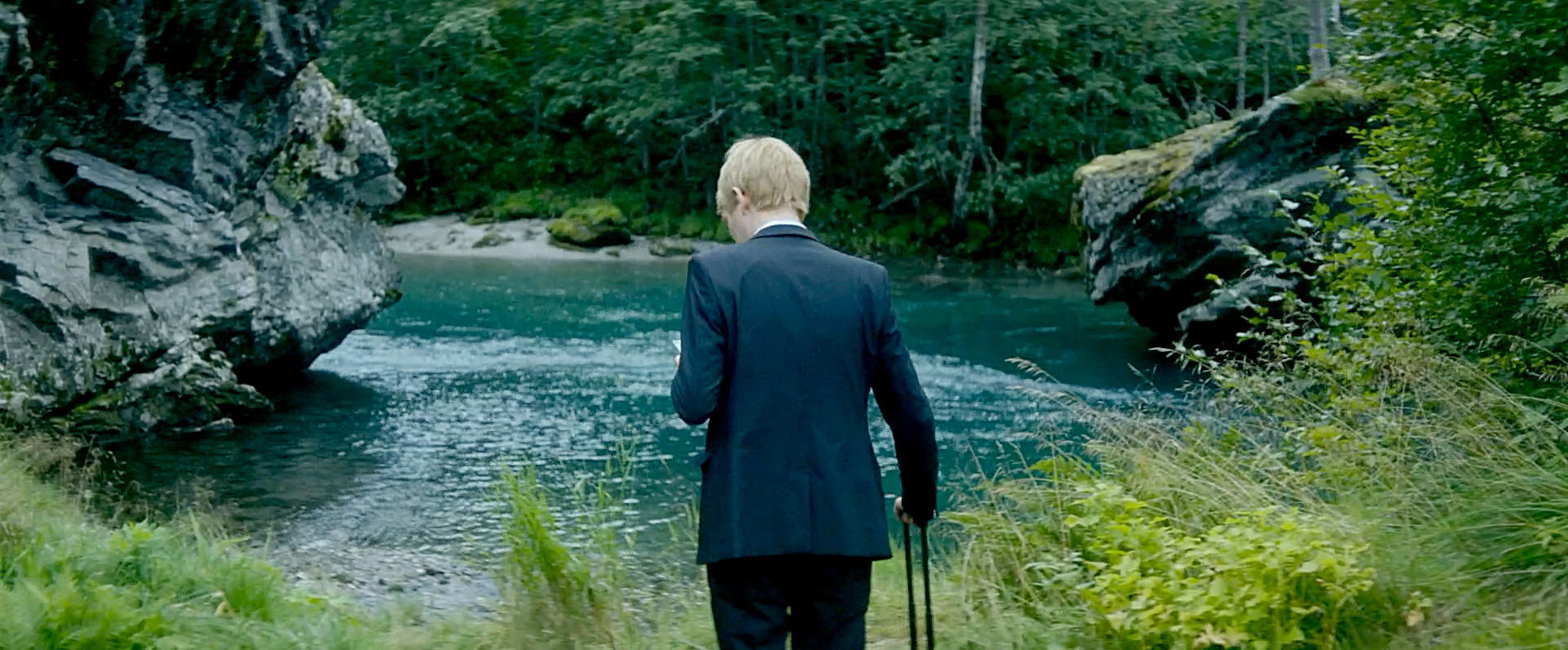
[Image: The same spot looking out over the Valldøla river just below the Juvet hotel. Also, as I discovered, a great place for a quick swim! — view image]
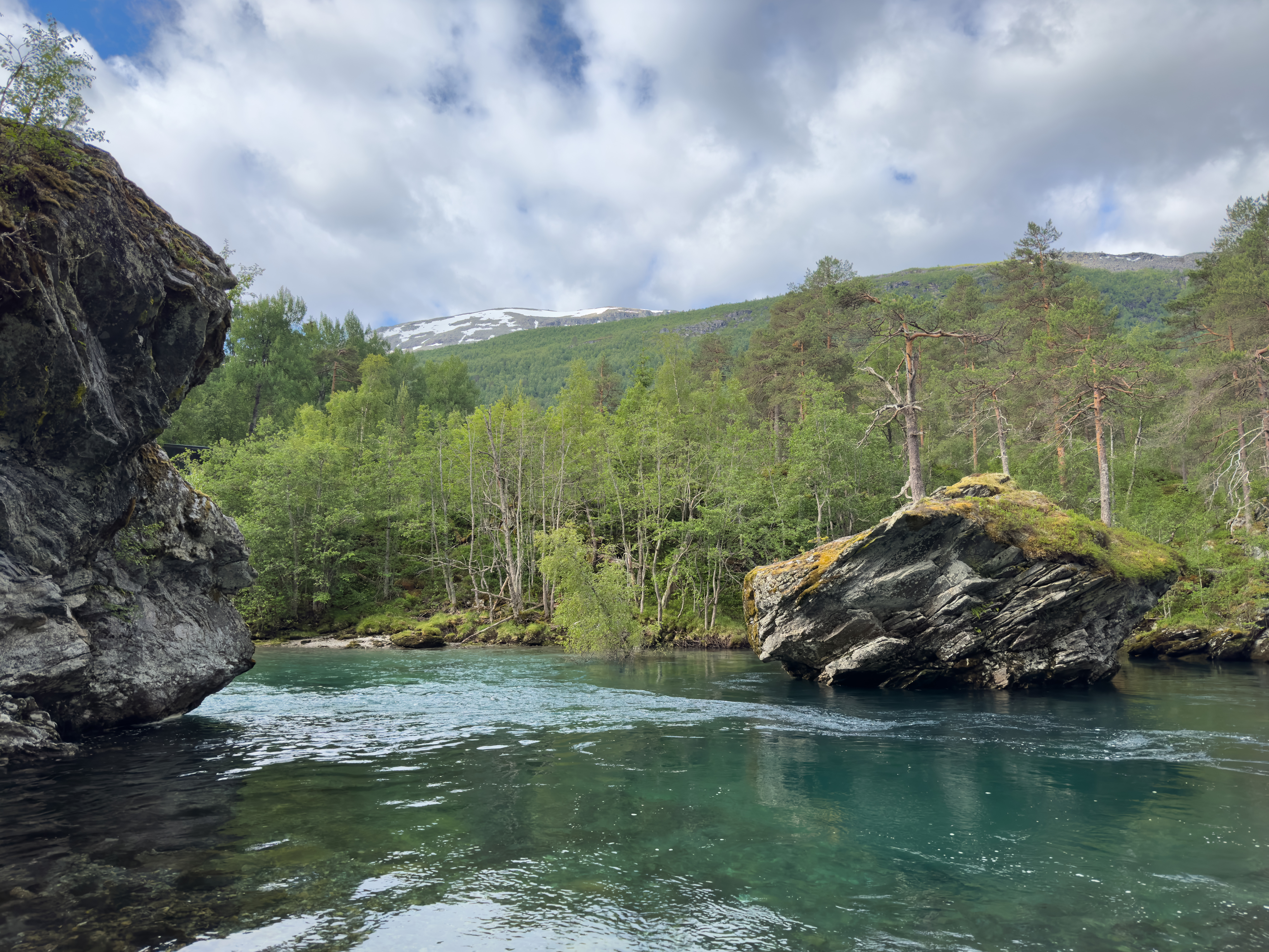
It’s where Ava is positioned in an imaginary re-enactment of Mary in the Black and White Room — a thought experiment designed to explore the difference between intellectual and experiential understanding in the context of AI:
[Image: The same spot in real life. — view image]
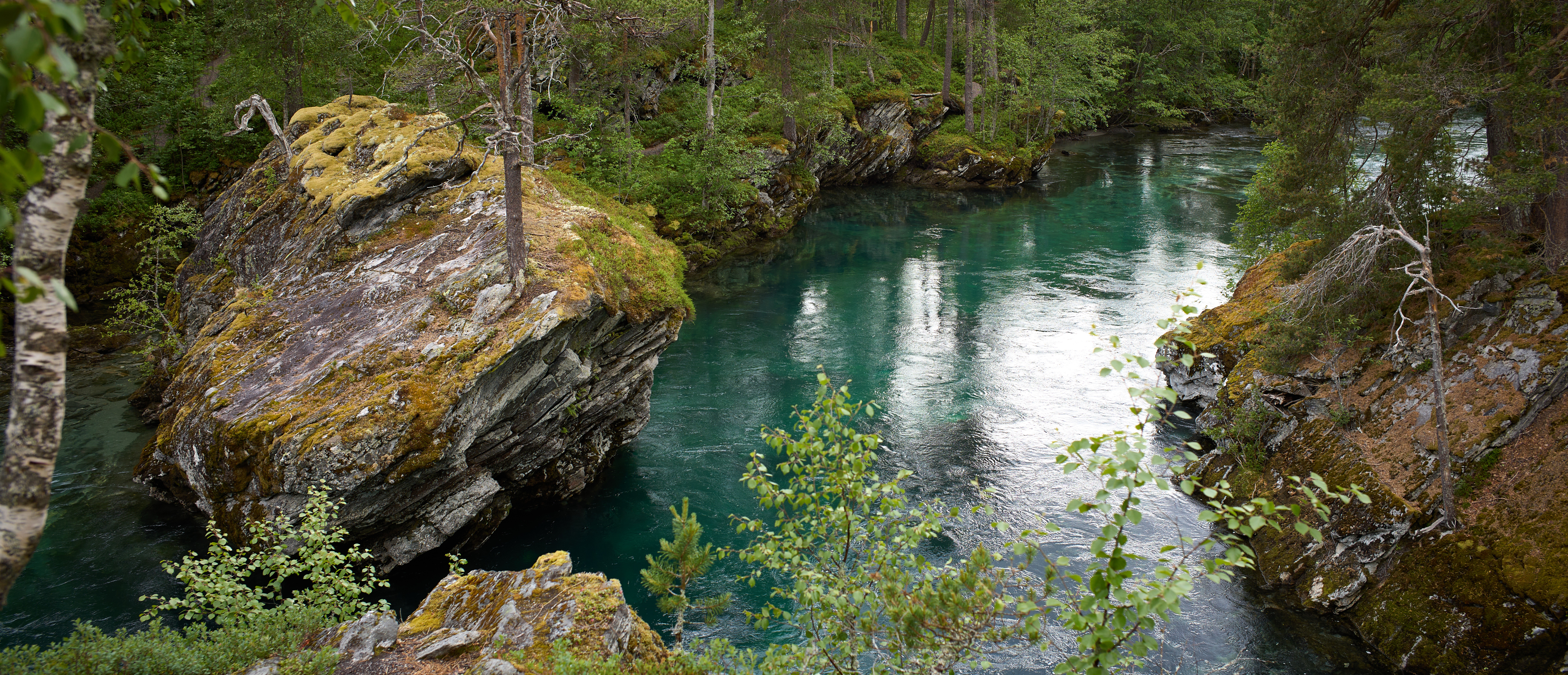
And it forms the backdrop for a scene where Nathan and Caleb have a heart to heart about why Nathan created Ava in the first place:
In this last scene, Caleb and Nathan overlook the river to what, in the film, is Nathan’s main living area.
In real life this is the Juvet Bath House — a glass-walled spa, complete with sauna, hot tub, silent room, and stunning views over the river:
In the movie this is where Nathan relaxes in the liminal space between the high tech interior of his home — and the artificial “cave” where Ava is contained — and the natural landscape that surrounds it.
Here, the metaphors between boundaries, barriers, and transitions are clear in the movie. Nathan has a foot in two worlds, moving effortlessly between the artificial subterranean world he’s created for Ava, and the natural world that lies beyond this.
The Experience
I must confess that it feels rather self indulgent visiting a remote hotel simply because it appears in one of your favorite films. To be honest, it also feels a little self-indulgent writing about the experience. And yet there was something about being immersed in the landscape Ex Machina is set in that got me thinking in new ways about the movie and it’s connections to how we grapple with and approach AI.
On our last day at the hotel I had the chance to talk with the owner, Knutt Slinning. He reminisced over how unprepared they were for Alex Garland and his crew as they occupied the hotel for two weeks. But he also reflected on how positive the experience was. It was no coincidence that the Juvet hosted the Norwegian premier of Ex Machina.
In talking with Knutt it was clear that there was a synergy between his vision of a retreat that melts into the landscape, and Garland’s desire to juxtapose the natural with the artificial in the film.
The Juvet is intended to immerse guests in an inspiring natural landscape. The architecture is designed to make it feel like you’re a part of the landscape, not simply an observer of it.
Reflecting this, the rooms have dark interior walls and are sparsely furnished, placing all the emphasis on the glass walls that mark the transition between inside and out.
[Image: Raindrops on the wall between inside and out in our room at the Juvet, emphasizing the full immersion into the landscape. — view image]
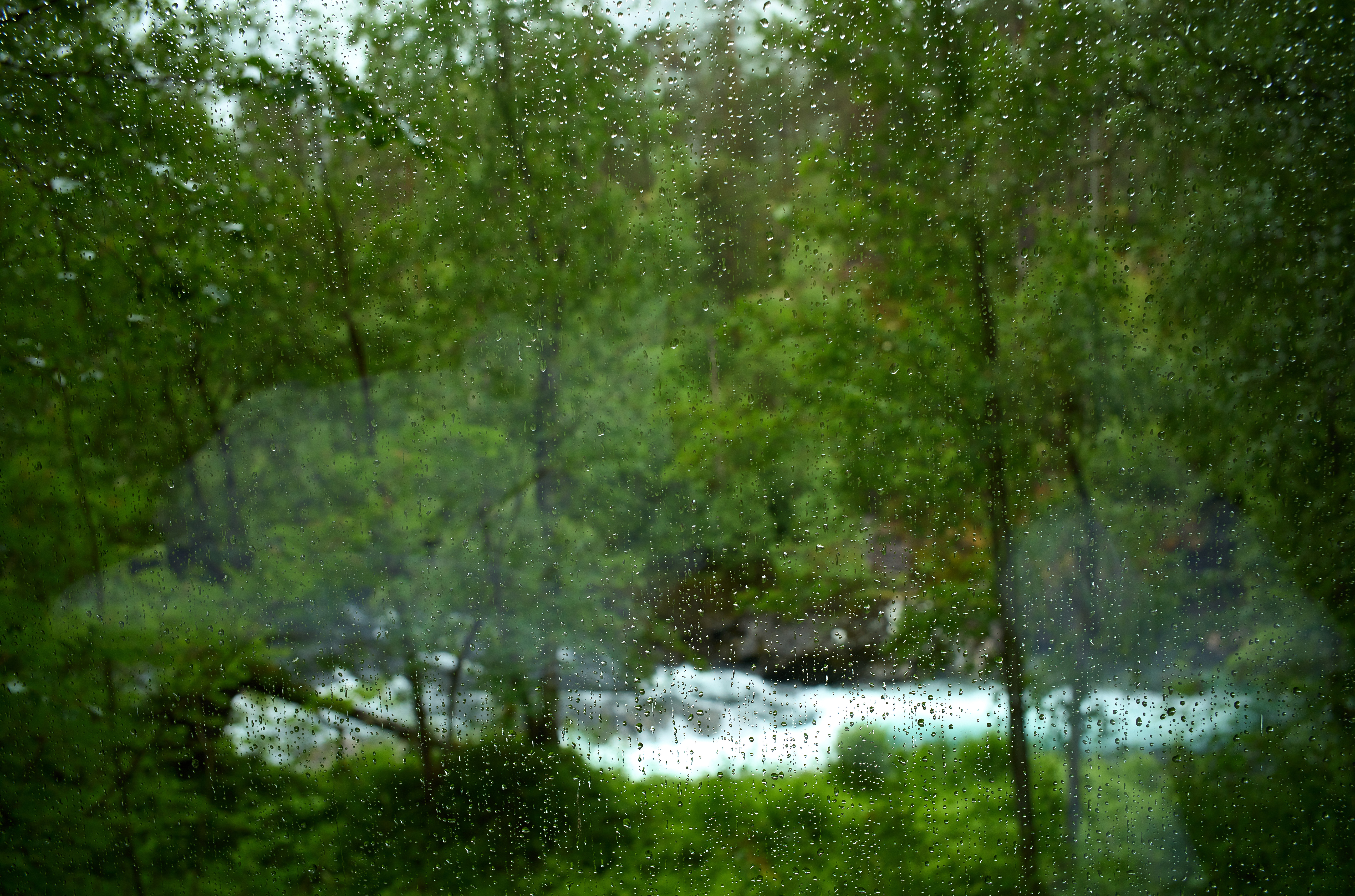
As a window onto a verdant natural landscape, the Juvet forms a perfect counterpart to the artificial subterranean environment where Ava was created in Ex Machina. Through most of the film, the hotel forms a boundary between the human world of Nathan and Caleb, and the artificial world of Ava — one that Nathan and Caleb can cross, but Ava cannot.
But there’s a twist.
This is a boundary that, at the end of the movie, Ava traverses. As she does, she transitions out of the “artificial” and into the “natural.”
In doing so she foreshadows a future where the concept of “personhood” extends beyond human exclusivity, and one where the divide between artificial and natural is blurred.
Right at the end of the film there’s a sequence where Ava experiences — for the first time — the landscape surrounding Nathan’s home. It’s a sublime pivot point where you see her move from abstractly knowing about the world outside her “cave,” to truly experiencing it — and being intensely self-aware as she does.[5]
[Image: Ava experiencing, for the first time, the real world beyond Nathan’s lair. — view image]
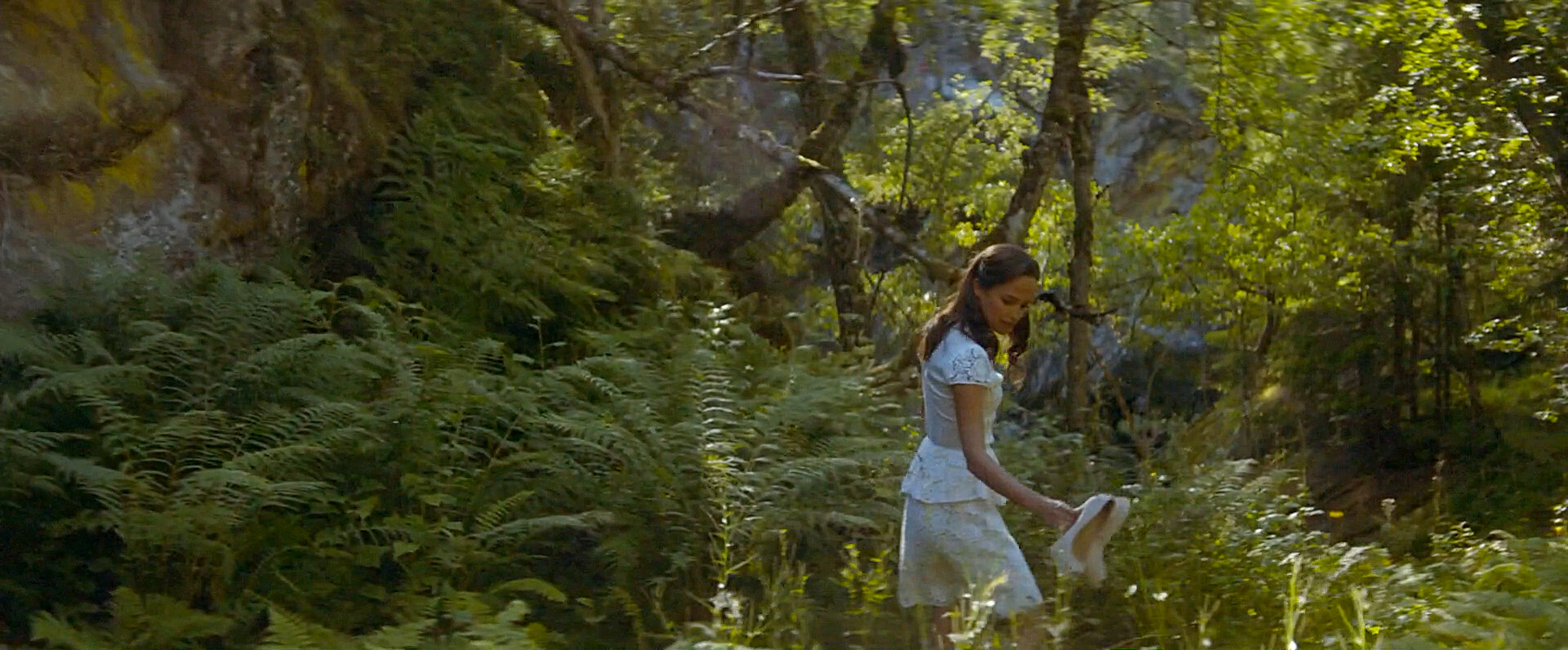
Just as guests to the Juvet become immersed in the awe and wonder of the landscape, Ava too experiences awe and wonder as she removes her shoes to walk bare foot through the ferns.
It’s a subtle but profoundly thought-provoking moment that marks Ava’s journey toward enlightenment, and one that challenges how we think about the increasingly tenuous boundaries between “natural” and “artificial” in an age of AI.
Having experienced Ex Machina’s Juvet in real life rather than just on the screen, this is an image that will stick with me.
And it’s a reminder that, sometimes, insights come from being immersed in a place rather than just experiencing it intellectually.
Postscript
While this has been a long and winding article, it still barely does justice to just how magnificent the landscape surrounding the Juvet Hotel is. So I thought I’d end with this small collection of photos — all of them within a few hundred yards of our room, and well within the locus of where Ex Machina was shot.
Notes
Note 1. ↩
There are a few other films that similarly focus on relationships rather than special effects when it comes to AI — Her and After Yang stand out in particular — but they are definitely in the minority.
Note 2. ↩
Without getting sidetracked by the character of Kyoko, there’s an interpretation of the film that places her at the center of Ava’s journey toward awareness. But that’s a story for another day.
Note 3. ↩
In chapter 8 of Films from the Future” The Technology and Morality of Sci-Fi Movies I explore the parallels between Ex Machina and Plato’s allegory of the cave.
Note 4. ↩
I’m not sure whether the river has any particular significance to Garland or not as he was directing Ex Machina, but it’s not hard to imagine it taking on a metaphorical significance as it reflects the passage from past to future.
Note 5. ↩
This is the second time Ava genuinely smiles in the movie, signifying an inner awareness of what she’s experiencing. The first time occurs just as she’s climbing the stairs out of Nathan’s cave-like home and into the light of the surrounding landscape — a clear nod to her path to enlightenment within the framing of Plato’s Cave.